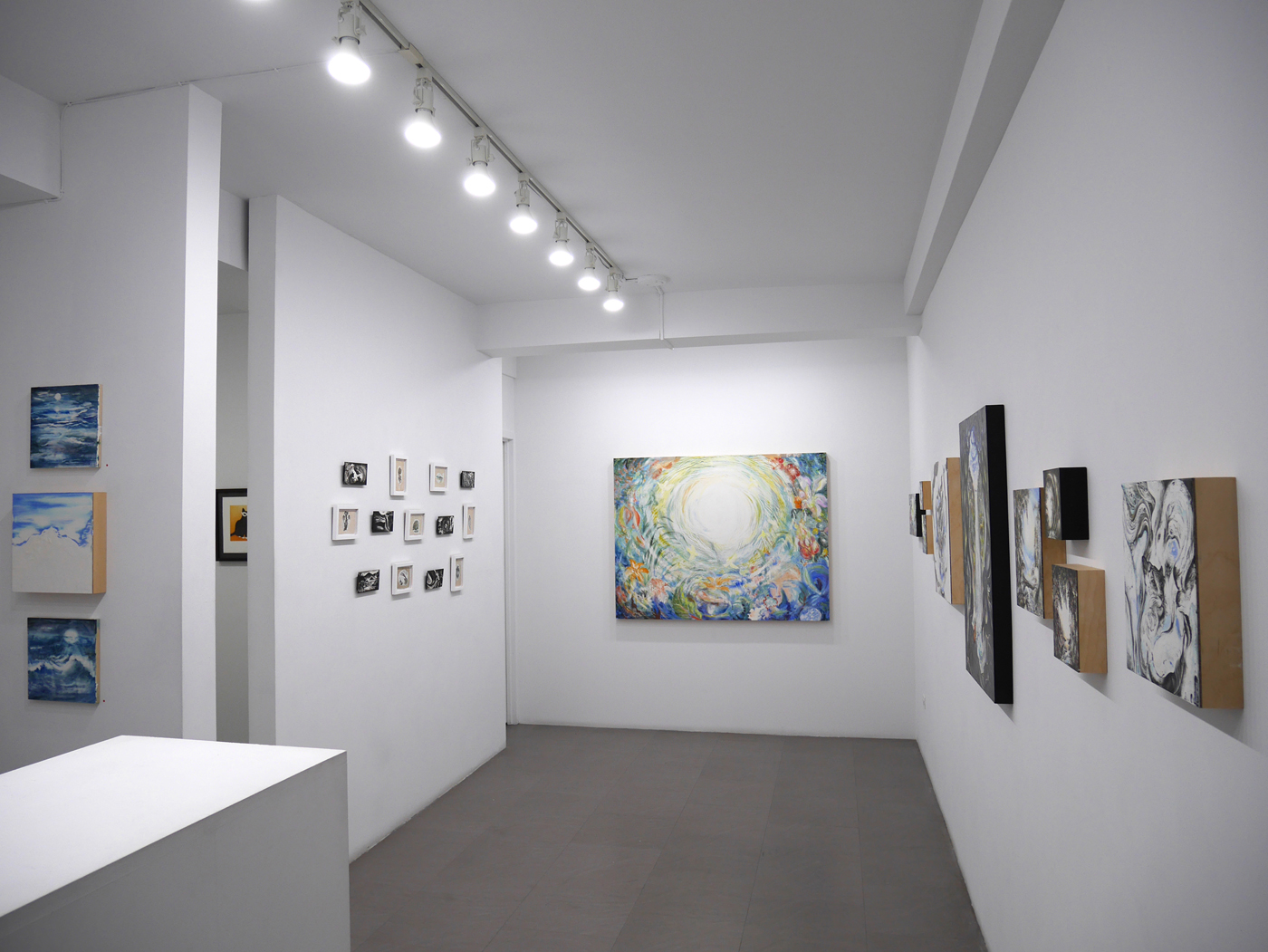
ZG Gallery :: Chicago :: 20th Anniversary Exhibit : 20×20 Group Show
OPENS Friday July 8, 2022 from 5-8pm Thru August 27
300 W Superior Street, Chicago, IL
CLEVELAND :: CAN Triennial (held in various venues in Cleveland Area) Opens June 8th : M-F 10-5pm
Cleveland Institute of Art @ Anna and Norman Roulet Student and Alumni Gallery
Reception July 29 from 6-8pm : Alongside openings at The Sculpture Center, Artist Archives of the Western Reserve (The CAN Trienniel exhibition is held at various venues running concurrently during FRONT Trienniel, an International Event held in Cleveland, OH
Thru May 6, 2022 :: “Exquisite Attention” at Hedge Gallery, CLE :: VIEW WORKS
3 Woman Show features the works of :: Cathie Bleck, Rebecca Cross, Taryn McMahon :: VIEW ENTIRE EXHIBITION
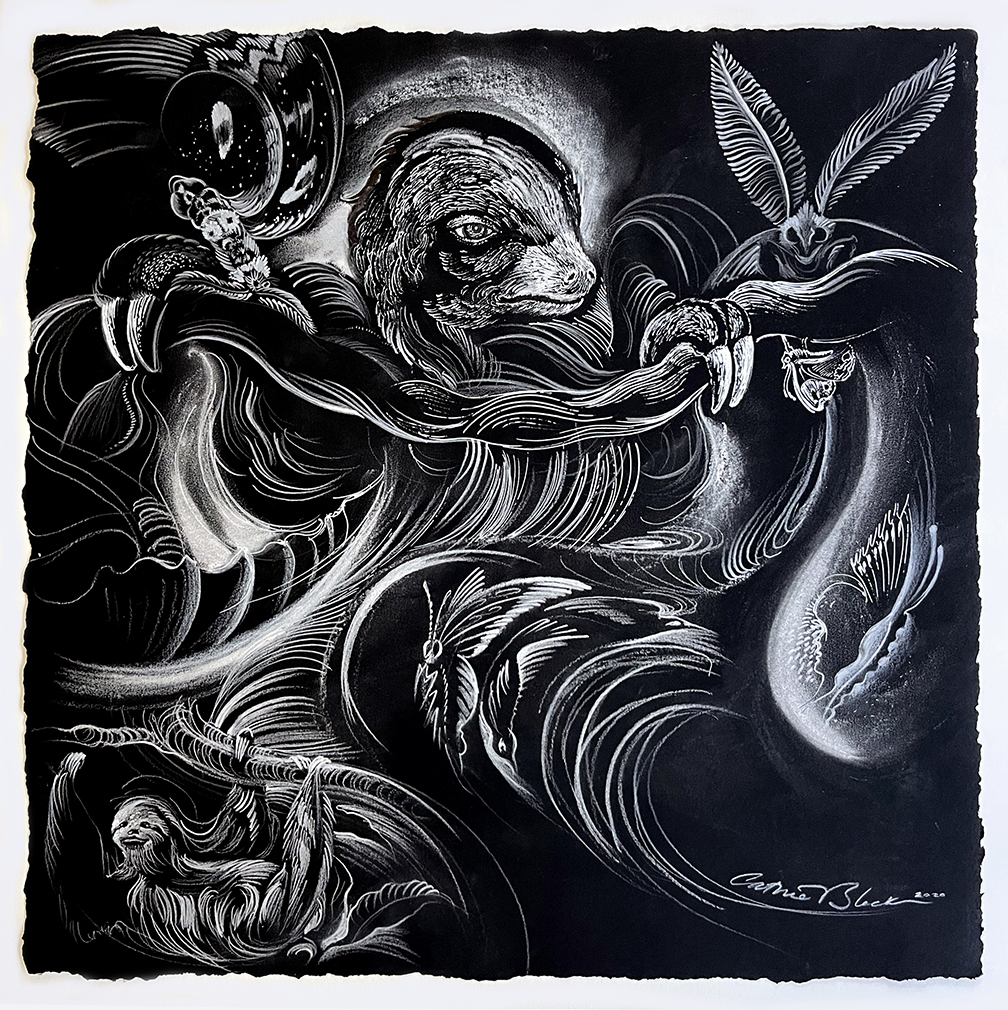
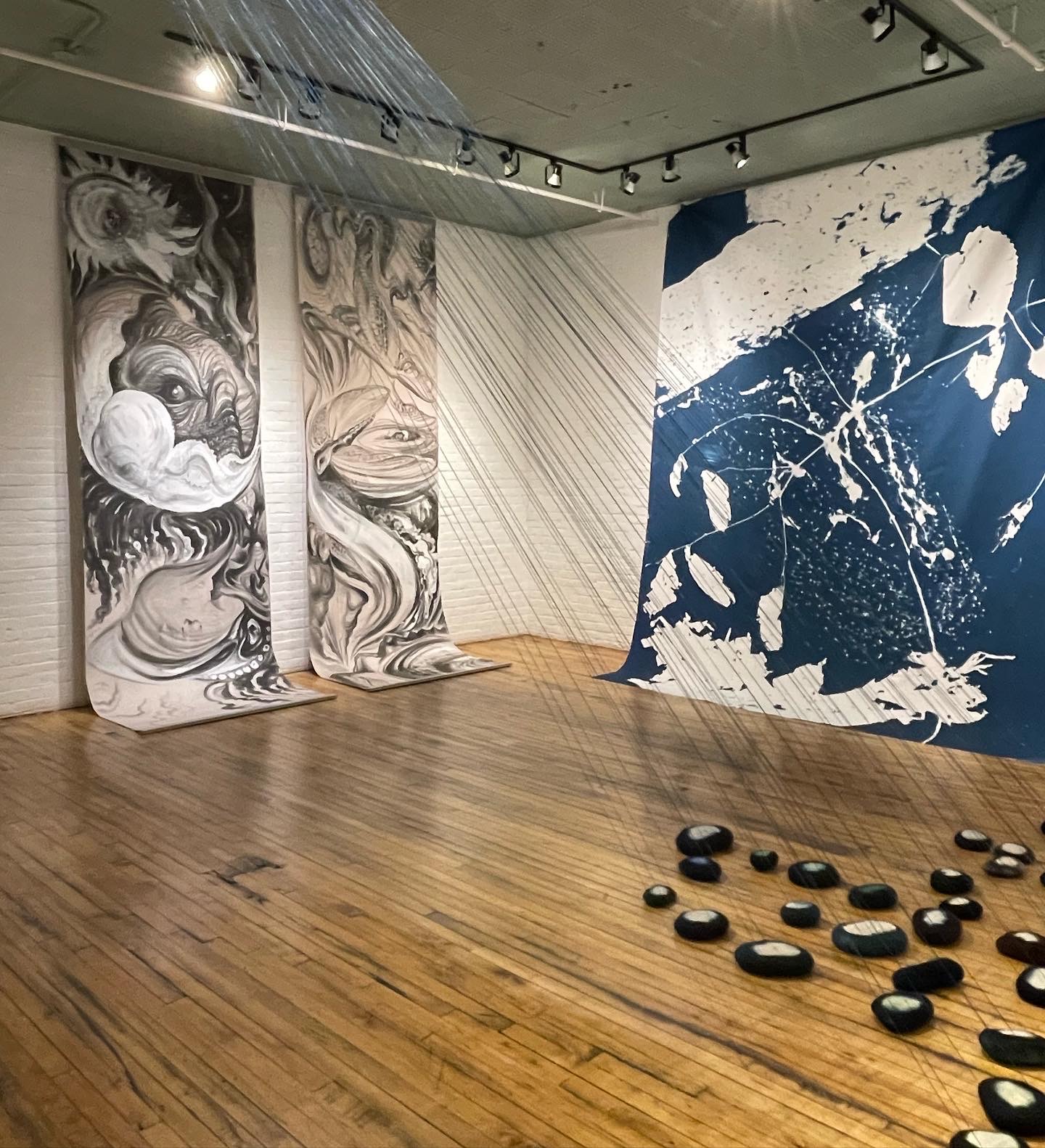
+ Collaboration of “Exquisite Corpses” an exchange, whereby each artist created one third of the artwork : Cathie Bleck chose Black Stonehenge paper, Rebecca Cross chose Silk, Taryn McMahon chose Stonehenge paper :: VIEW EXQUISITE CORPSE COLLABORATION
ARTIST STATEMENT
The tools I work with-pen, graphite, ink, and clay became natural choices for someone drawn to observe and record the world in close detail. I am interested in the orchestration where the balance occurs between opposing forces: light, dark; intimate, huge; static, moving”.
I am interested human origins, lineage of species, the infiniteness of the cosmos and the mythologies that have been born since the dawn of life on earth. I am also fascinated by the dynamic relationship between humans and the forces of nature that define and reflect in all our lives.
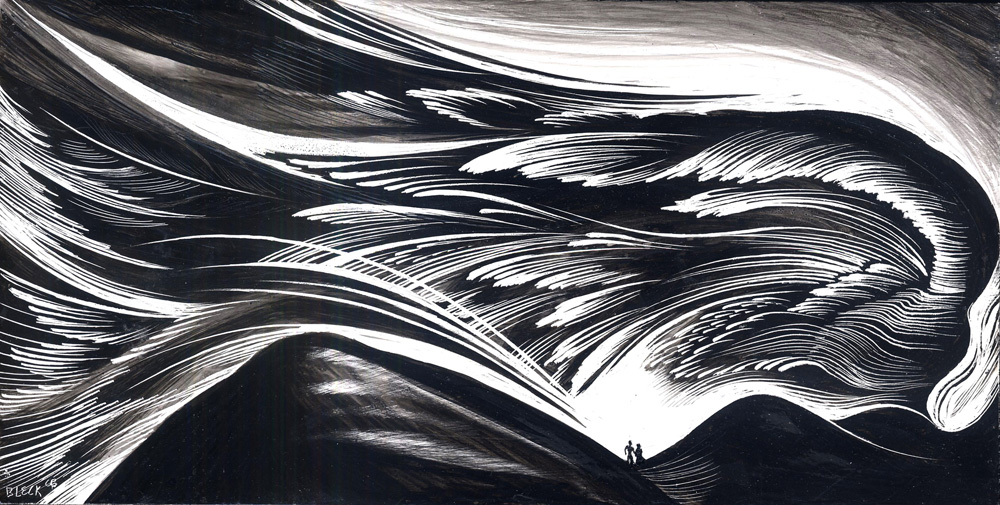
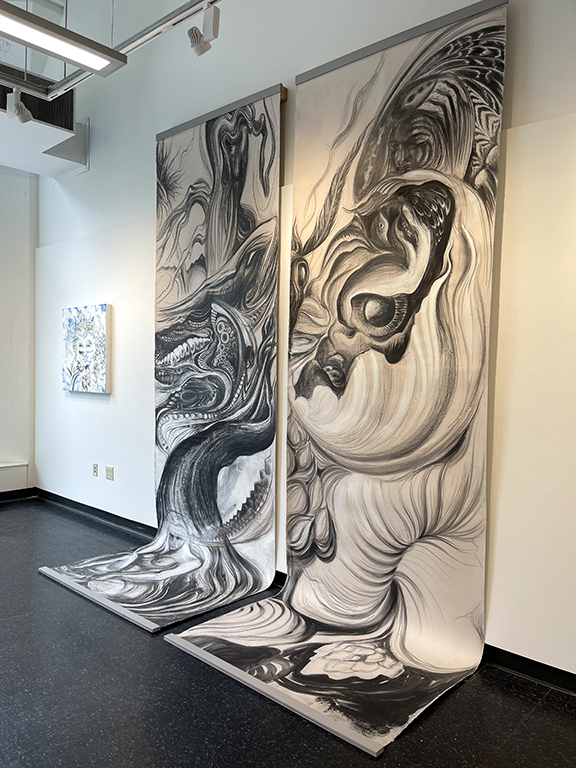
My works on paper for this exhibition are a visual journal, inspired by travel and experiences I have recorded in sketchbooks for over forty years, several of which are on display. My installation of cascading scrolls are my largest works to date and created on Stonehenge paper measuring 55” x 170”. I began these large-scale scrolls in 2011 with dual goals in mind. I wanted to reset and unblock my approach to creating images which for decades I’d been producing in small scale, with minute detail using an unforgiving medium. These scrolls reveal a narrative about the dualities that exist in nature, both past and present and our human evolution.
Drawing with a graphite Lyra soft pencil, powdered graphite mixed with water and applications of clay, I worked in 6 ft. increments using a pulley system my friends renovated spiritual space and gallery at St. Josephat’s.
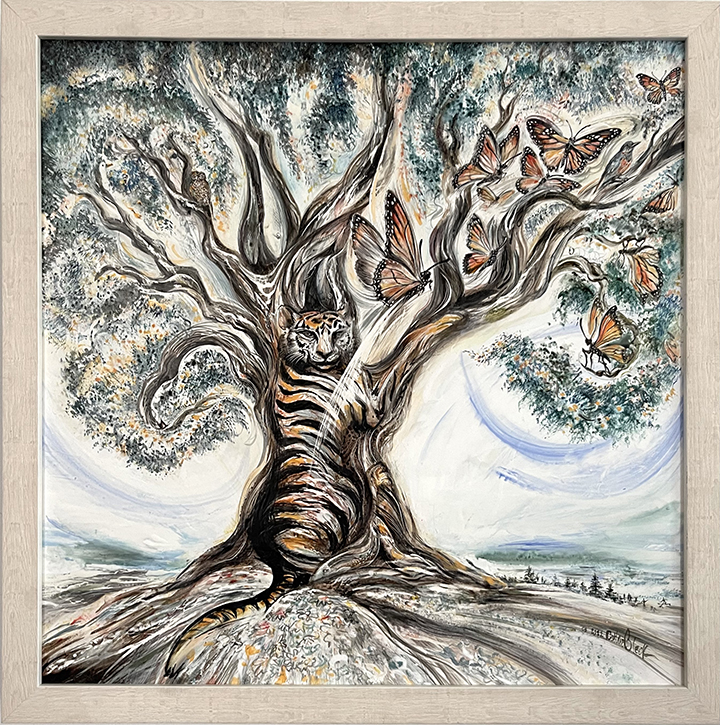
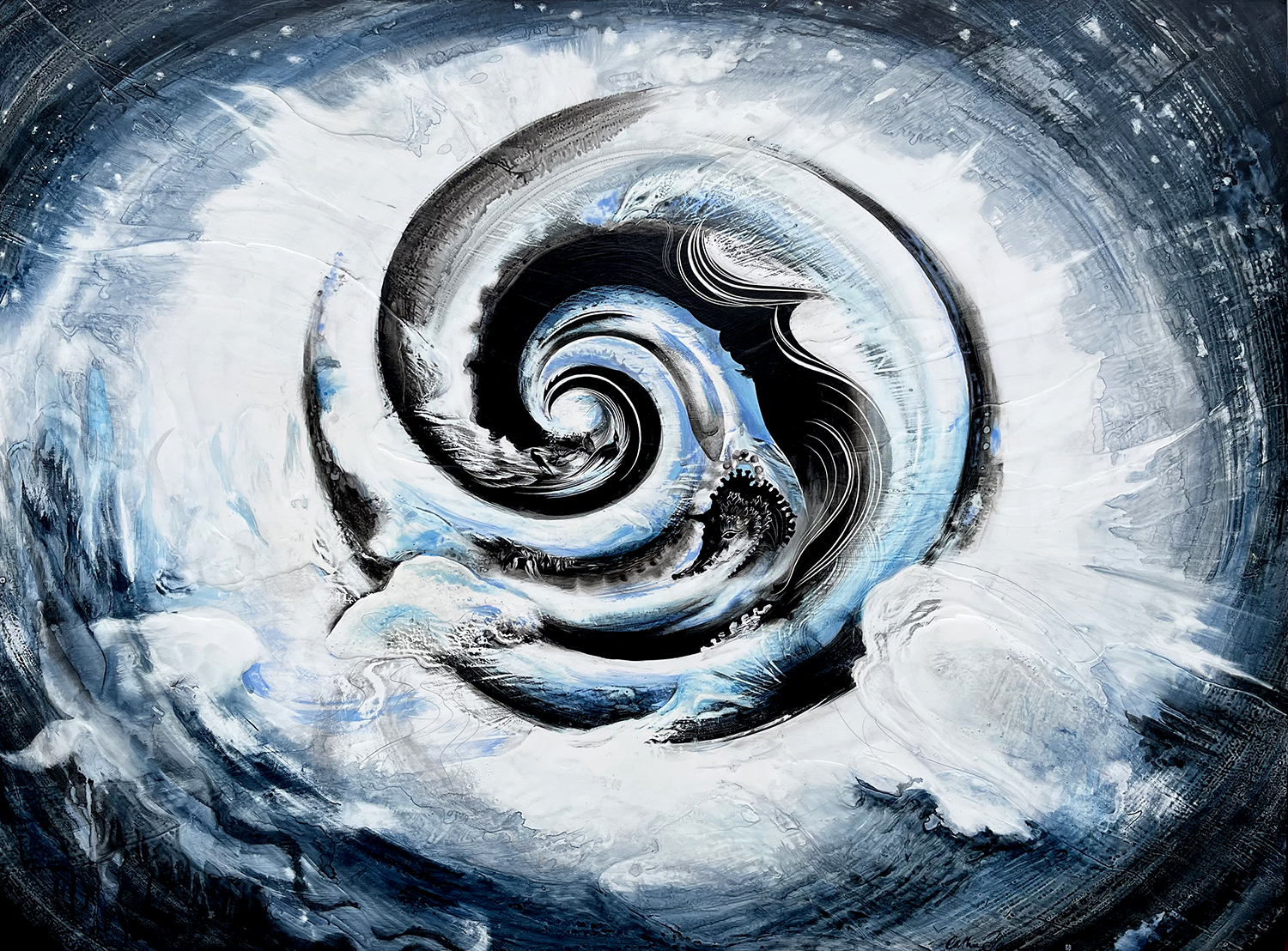
In the paintings I am using liquid kaolin clay that I mix with powdered pigments and apply to clay board or paper. Inspired by the title of the exhibition, I began my process by recalling the most spectacular things in nature that I have ever witnessed.
EXQUISITE CORPSE STATEMENT
I found the collaborative project of the “exquisite corpse” with Rebecca Cross, Taryn McMahon injected me with so much inspiration. Especially during such a difficult isolated time during the pandemic. The exchange was quite the respite on an art island. We each began our series with four pieces of paper and created images starting with the top one third of the paper, then exchanged it to the other. I chose black Stonehenge paper, Taryn used a white Stonehenge paper and Rebecca used a double silk panel. We decided not to hide our work from one another, which I am thankful for. I was so in love with the saturated indigo blue of Taryn’s work and the fine threads and dyes on silk of Rebecca’s work. I used this inspiration of using indigo blue in several of my works and fell in love with working on silk for the first time. I could not believe how forgiving and resilient and sumptuous painting on silk would be.
Being moved by beauty: beauty in chaos, beauty in human form, beauty in believing, beauty in resolution.
Seasons of the heart and soul flow through our lives, blending in and through one another, oblivious to the clockwork precision of the sun and moon, but with the same relentless persistence. In each season the spirit may be raised up or crushed, illuminated or left in the shadows, but ultimately it crosses the blurred threshold between an end and a new beginning, elaborates at once the vulnerable nature of the human spirit and its immense resilience in the face of adversity, the agility with which it evolves tirelessly in dynamic new directions. Nature teaches us lessons everyday in how to surmount and navigate through our life and all that it challenges.
We will get past this difficult time we are living in…we always have as we have repeated our behavior over and over again since the dawn of mankind.
2021 Group Exhibition)
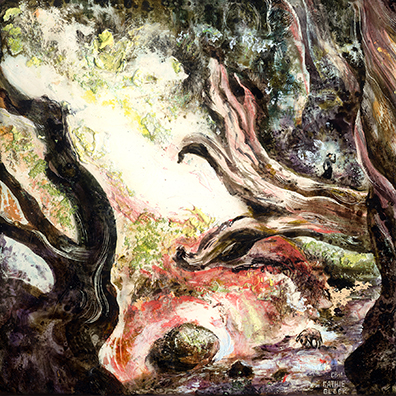
Zg Gallery, 300 W. Superior St. Chicago, IL / Spring Collection April thru June
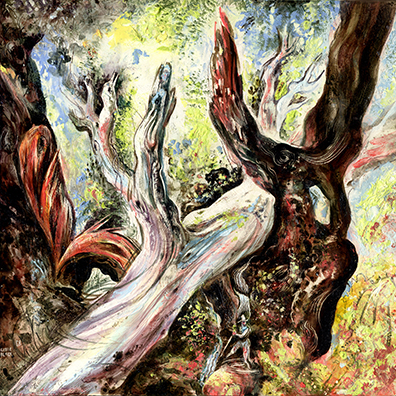
2020 Group Exhibition
The 15TH ANNUAL BLAB SHOW, curated by Monte Beauchamp, @blabworld, opens to the public
Saturday, September 12, 2020 from 1-7pm
Copro Gallery at Bergamot Station in Santa Monica, CA.
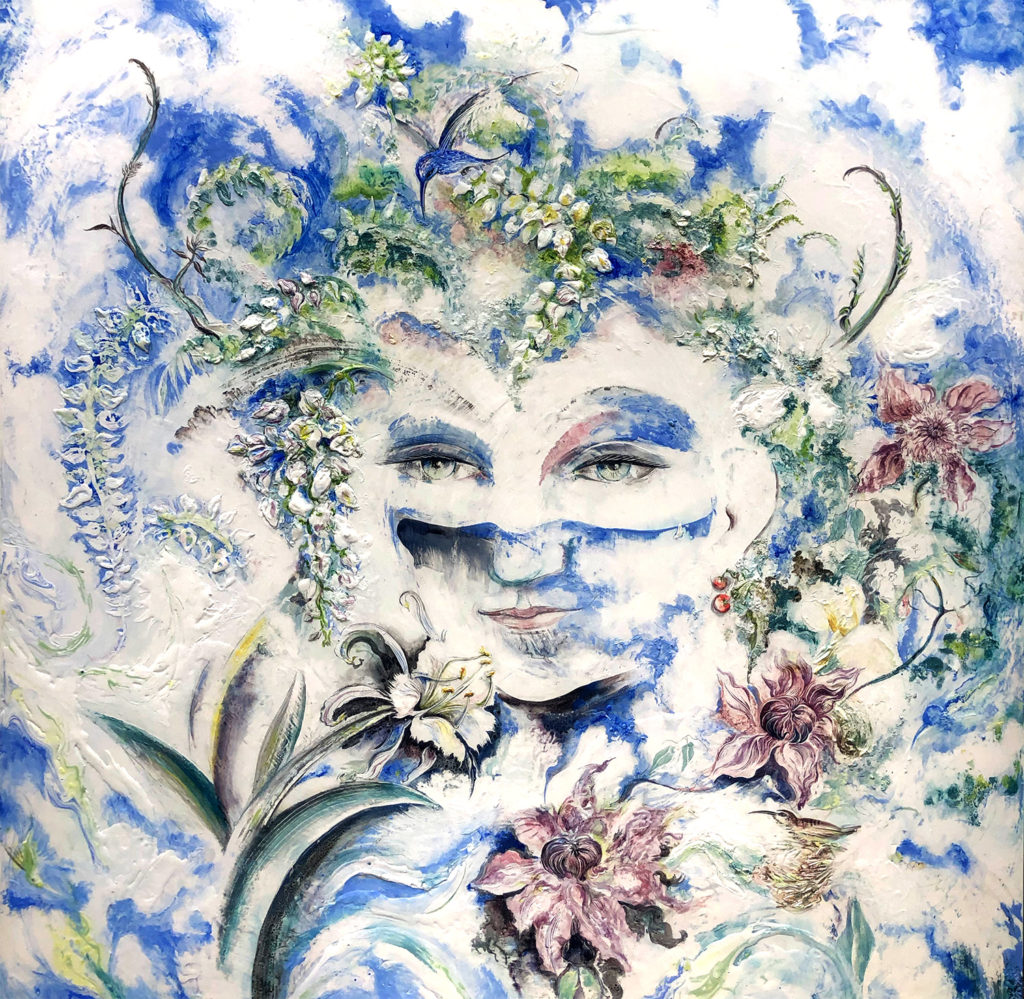
30” x 30” x2” AVAILABLE
Contact coprogallery@live.com for inquiriesHere’s a preview link to the artwork on exhibit: http://www.copronason.com/blab20/ The gallery can accommodate up to 10 people at a time inside and there’s plenty of room in the gallery’s back outside area should you have to wait. #coprogallery#newcontemporaryart @CoproGallery #cathiebleck #contemporaryart#flowers#gallery#art

“Permeate” 5” x 36” inks clay pigments on clay board AVAILABLE
“Process and Material” curated by YoonShin Park at Woman Made Gallery in Chicago @womanmadegallery #chicago
August 7 through August 30 contemporaryart #woman#artists #mixedmediaart #process#material #chicago#cathiebleck
Details on “Permeate” music by James Muschler
2019 Solo Exhibition
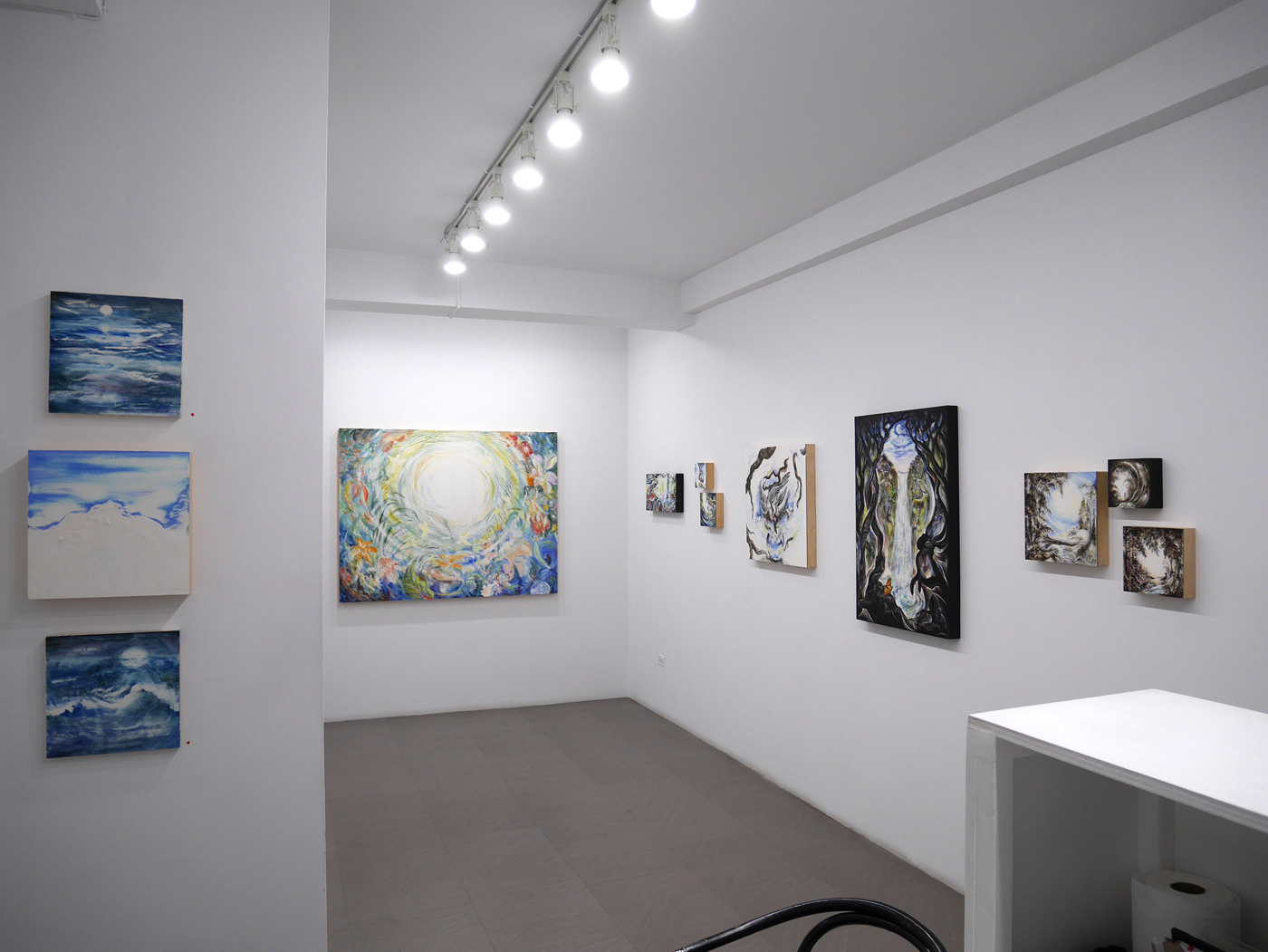
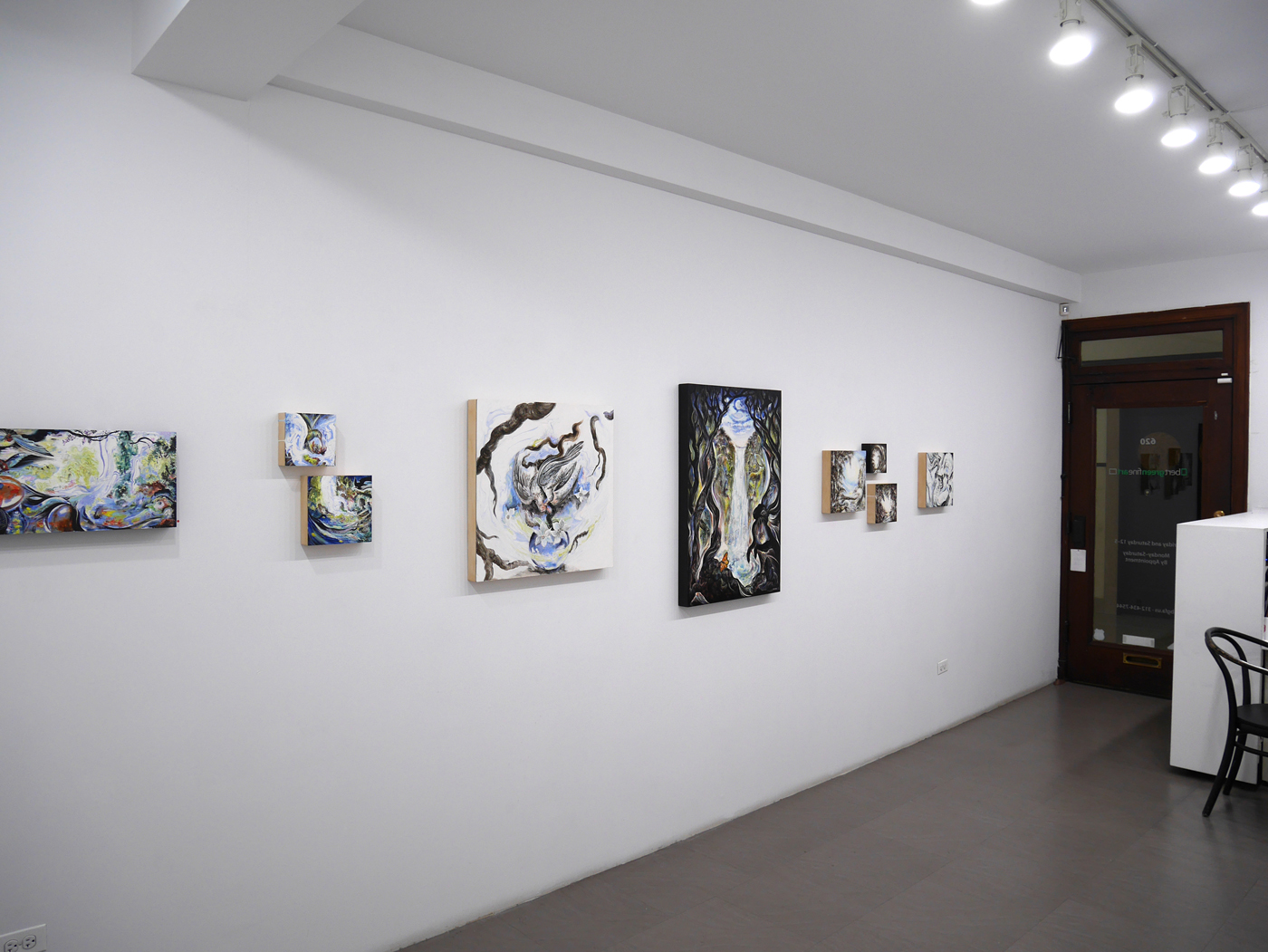
“Immersion” : Chicago : Bert Green Fine Art curated by Alix Sloan/Sloan Fine Art : May 18-June 22
 “Bouquet” 24″x24″ 2019 Lacquer Inks, handmade kaolin pigments on clay board panel AVAILABLE

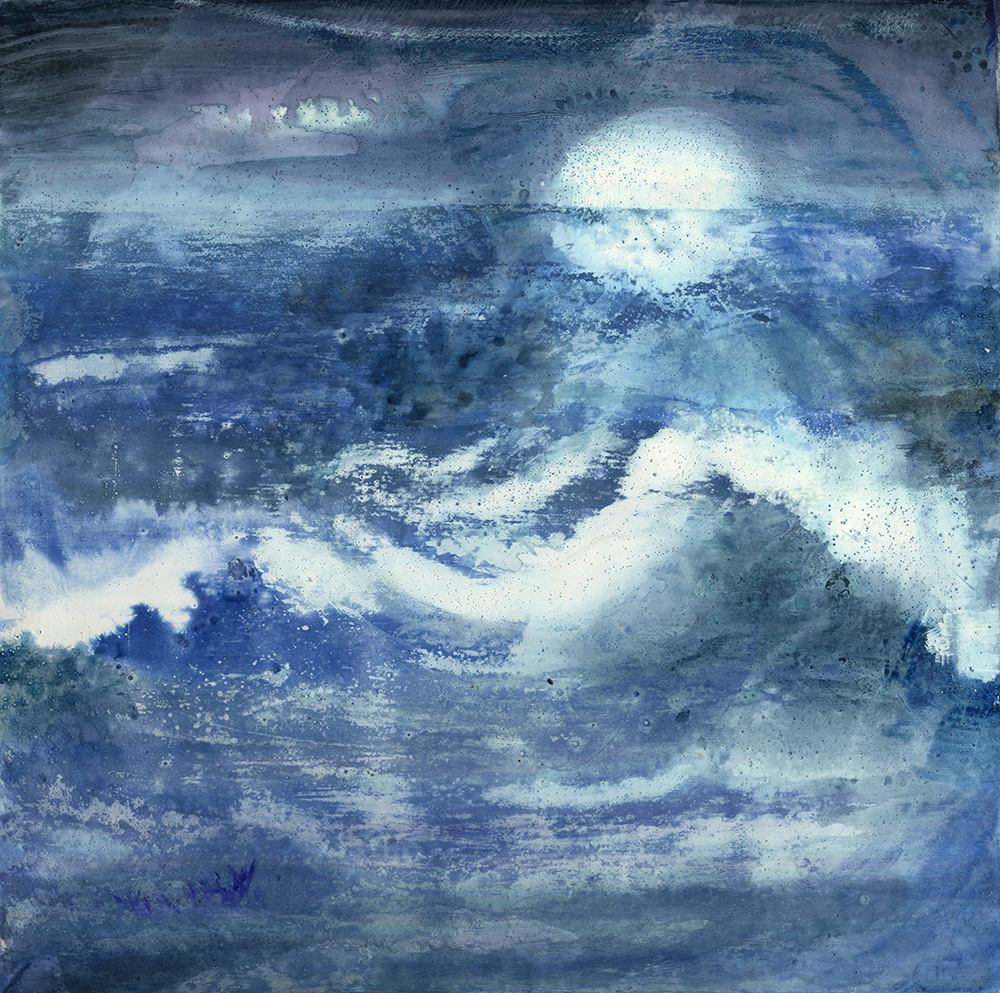
“Two Moons” 10″x10″ each panel 2018 Lacquer inks, handmade kaolin pigments on clayboard panel SOLD
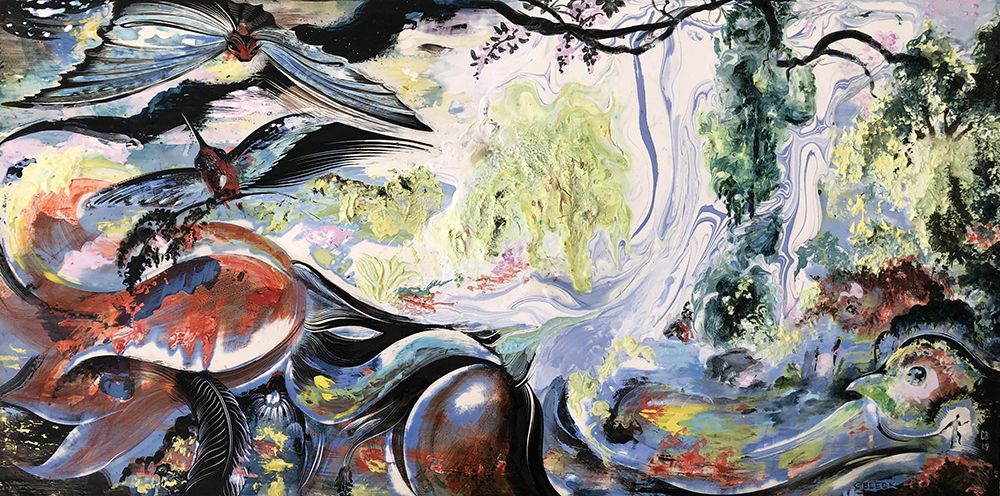
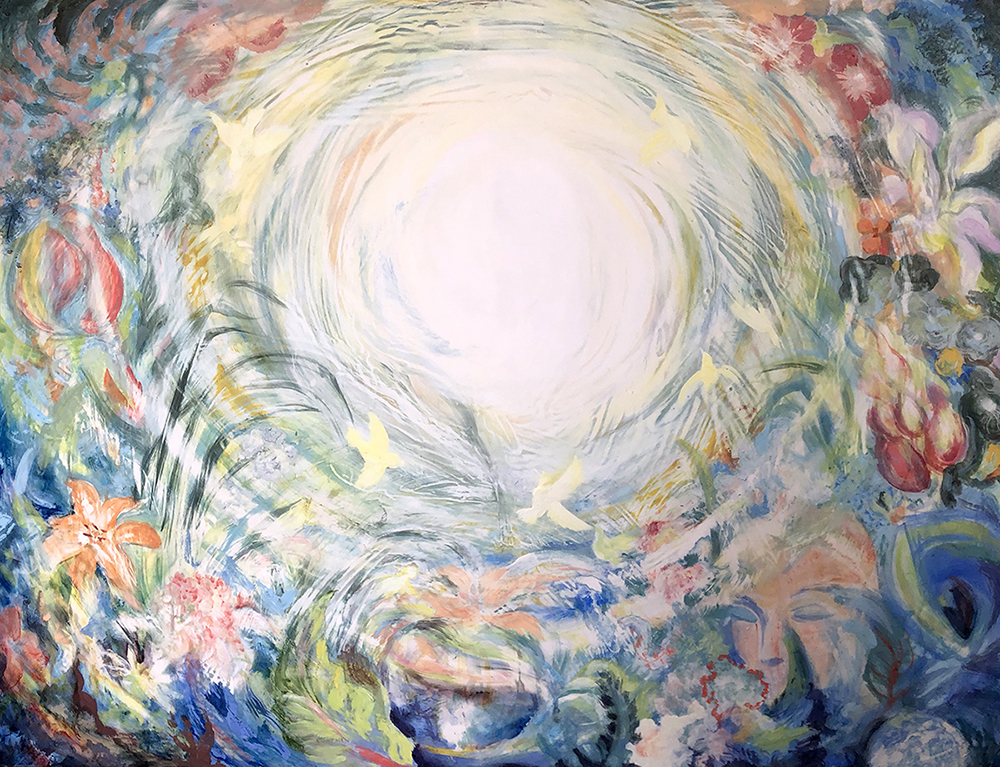

 “Bleu” 2014 Lacquer Inks, handmade kaolin pigment on clay board panel 12″ x 12″
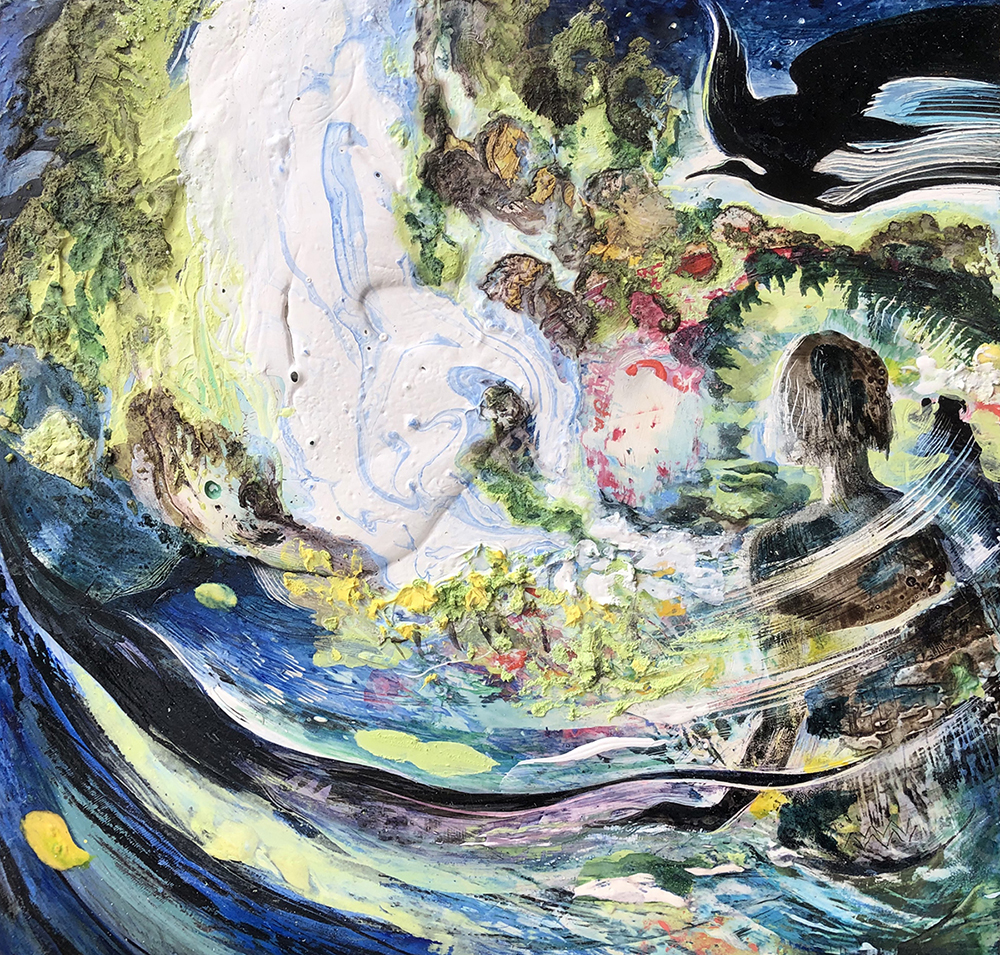 “Nights Calling” 2019 Lacquer Inks, handmade kaolin pigment on clay board panel 8″x8″ AVAILABLE
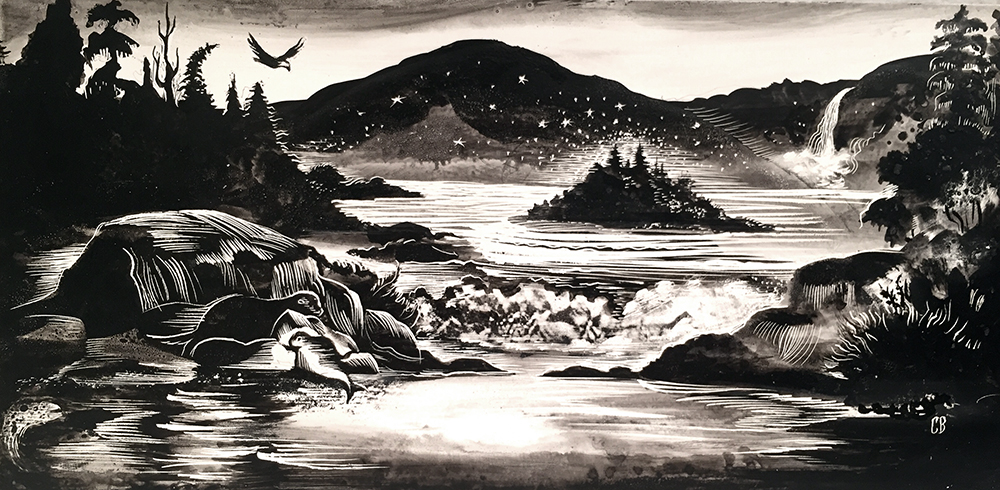
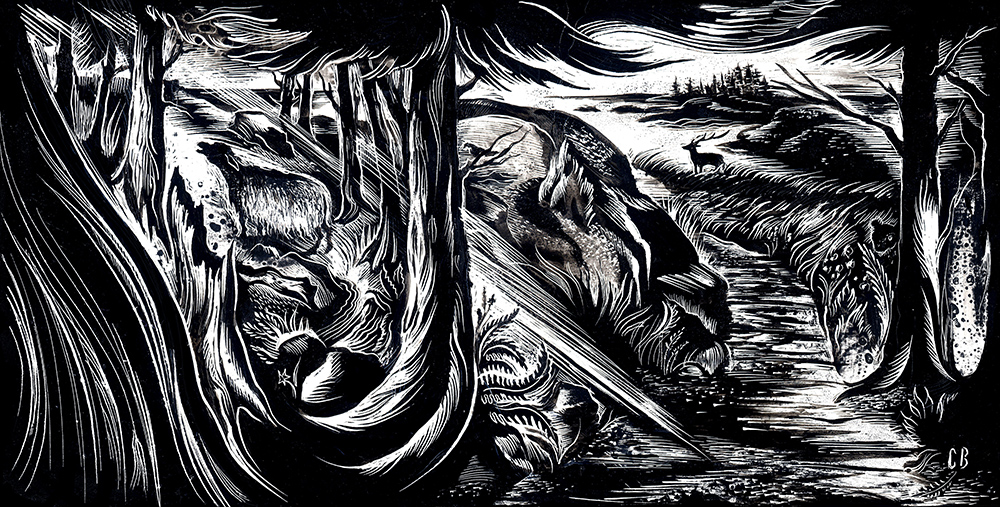
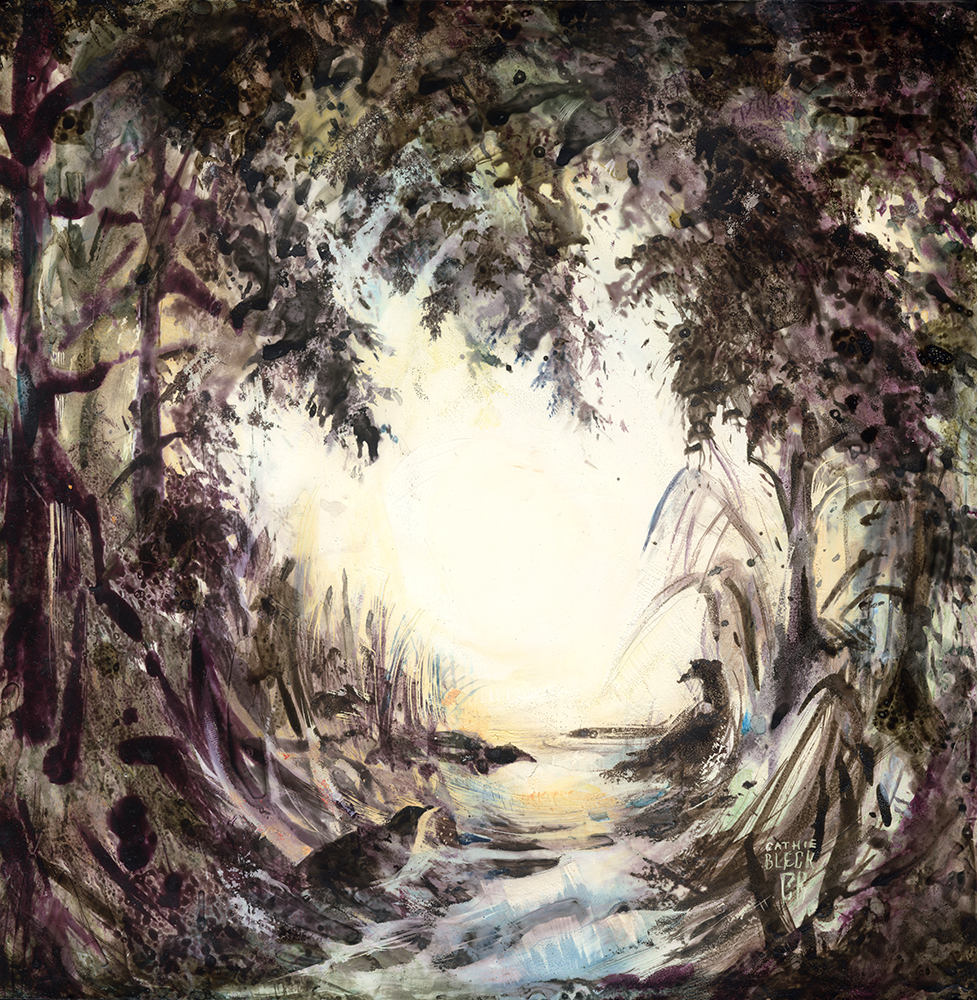
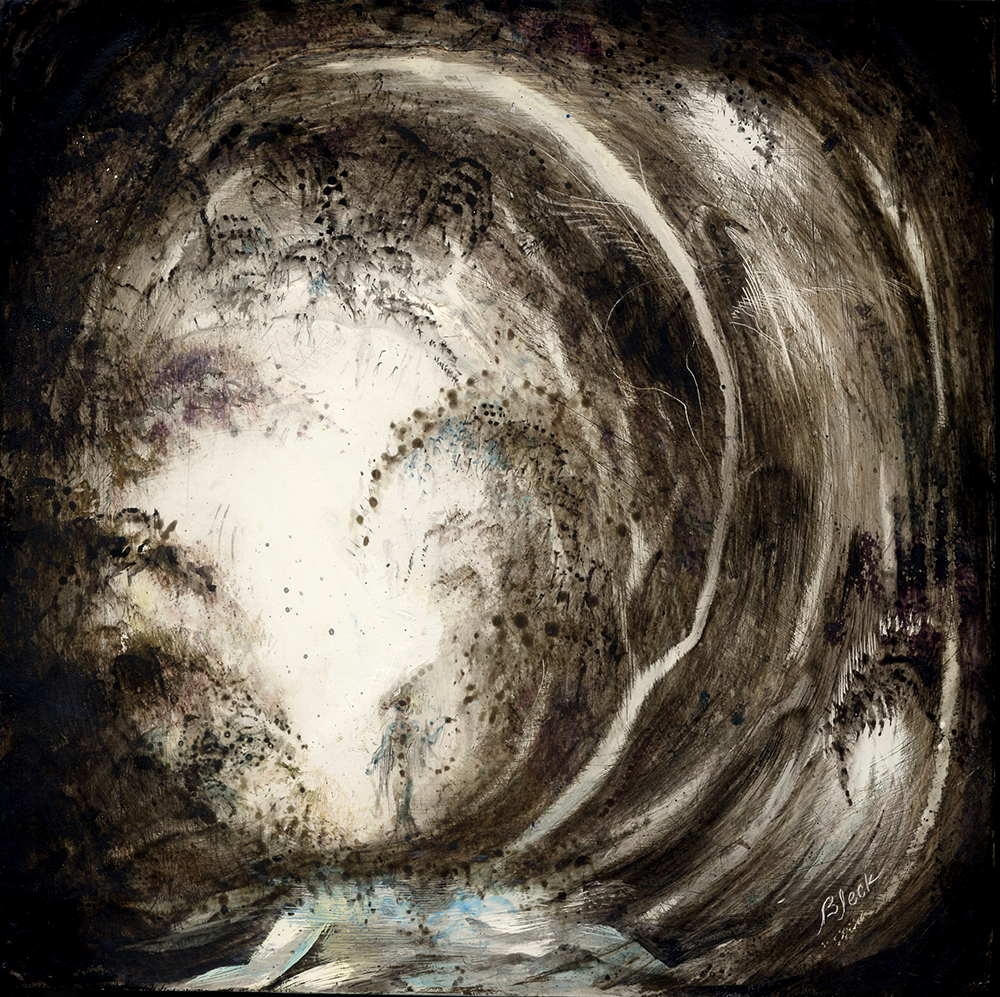
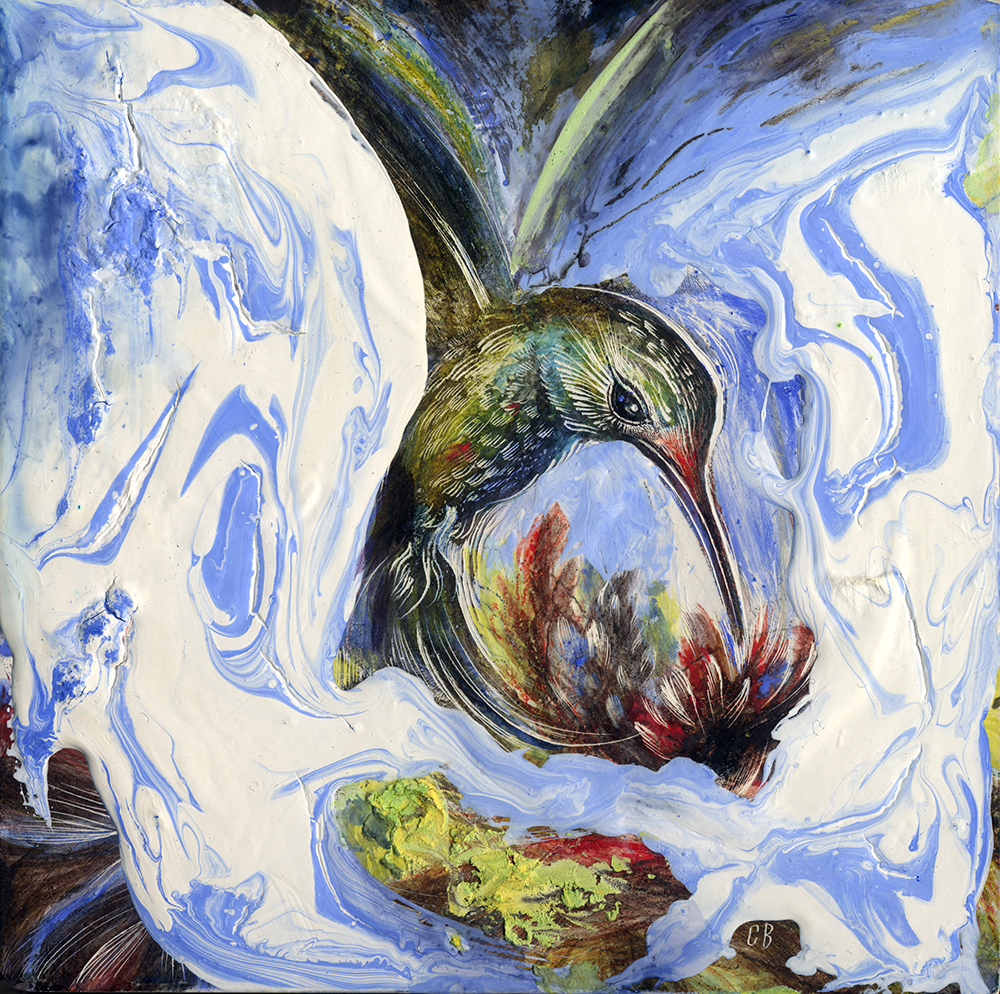
2019
RECENT Exhibition
“Immersion” : Chicago : Bert Green Fine Art curated by Alix Sloan/Sloan Fine Art : May 18-June 22
View all artworks at Sloan Fine Art
Available works : Bert Green Fine Art
“Light can come from inside or out, above us or below. We can swim in light without seeing or dance in the dark with perfect illumination. Light within or between us can be the hardest to see…until we pause.” CB
During a self-appointed sabbatical over a year and a half, I traveled in France, Croatia, Iceland and sailed up Vancouver island into Desolation Sound. The extraordinary diversity in the scope, texture, and movement of water in these flowing landscapes has fueled this work. These images explore and reflect feelings of intimacy, serene humility, and occasional clarity. I worked rather intuitively and some evolved into ambitious and even experimental works.
With paints that I make by hand with organic kaolin clay and pure pigments I build layers, finally adding lacquered inks and oil paint. Through these layers of sculptural dimension, light and narratives reveal themselves.
This is an offering to the timeless gifts of inspiration and metaphor available through immersion in this garden we share.
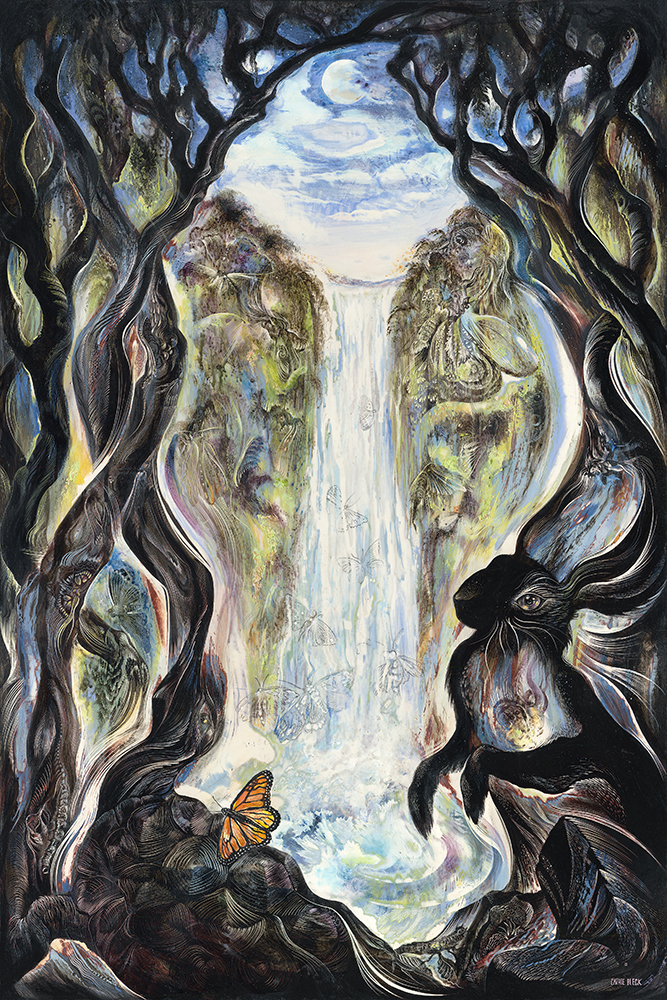 “Chrysalis” 24″ x 36″ Lacquer Inks, Handmade Clay Pigments on clay board panel
Press Release : Cathie Bleck‘s work is a series of luscious explorations into color, light, movement and form. Her process is a building up of multiple layers of organic clay and handmade pigments; she then carves, sands and etches the surface before adding inks, paint, lacquer and/or varnish. These expressive gestures — both subtractive and additive — create depth and lightness. Bleck created this show after an 18-month sabbatical were she traveled the world. Refreshed by glittering waters and enveloped by lush landscapes; she surrendered herself to the universe, utterly and completely immersed. The resulting works are at once bold and intimate, confident yet quiet, soulful and smart. Originally from Chicago, Bleck currently resides in Cleveland.
Bleck will give an artist talk about her work on Saturday, June 22 at 4 pm.
More photos and films from exhibition on Instagram cathie bleck
2015
“Avance” : Chicago : Firecat Projects : August/September
This body of work is a continuation of an ongoing series that explores the vulnerable nature of the human spirit and its immense resilience in the face of adversity. We continually pose questions like, “Now what? What will be? When will it happen?” These questions articulate a moment in time when a transition is taking place, when the world inside us changes. I feel that the most important parts of being human are those moments when we have the courage to rise up and face our demons; it is at these transitions that life’s challenging circumstances are reshaped indefinitely. Rather than focusing on the before or after, I use anthropomorphic characters to depict the state of mind when something happens; that place when we are moving through our lives experiencing courage, love and transcendence.
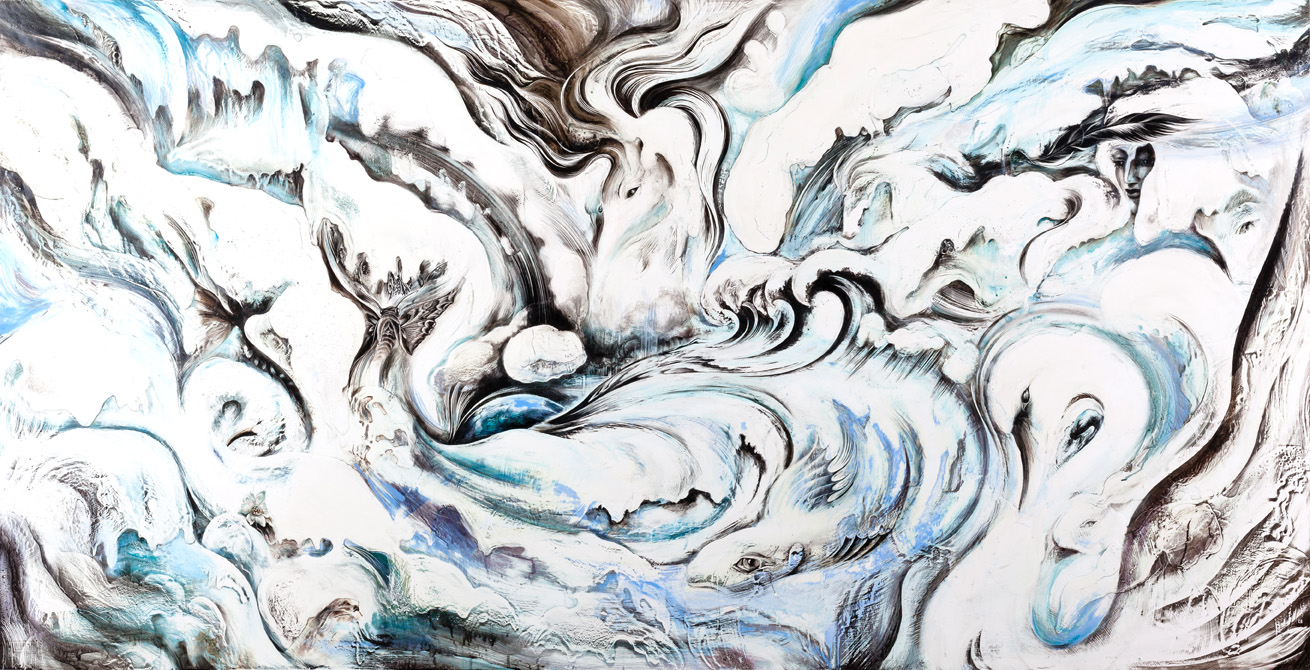
“Sacrifice I” 46″x 90″ Inks, lacquer and clay pigments on panel
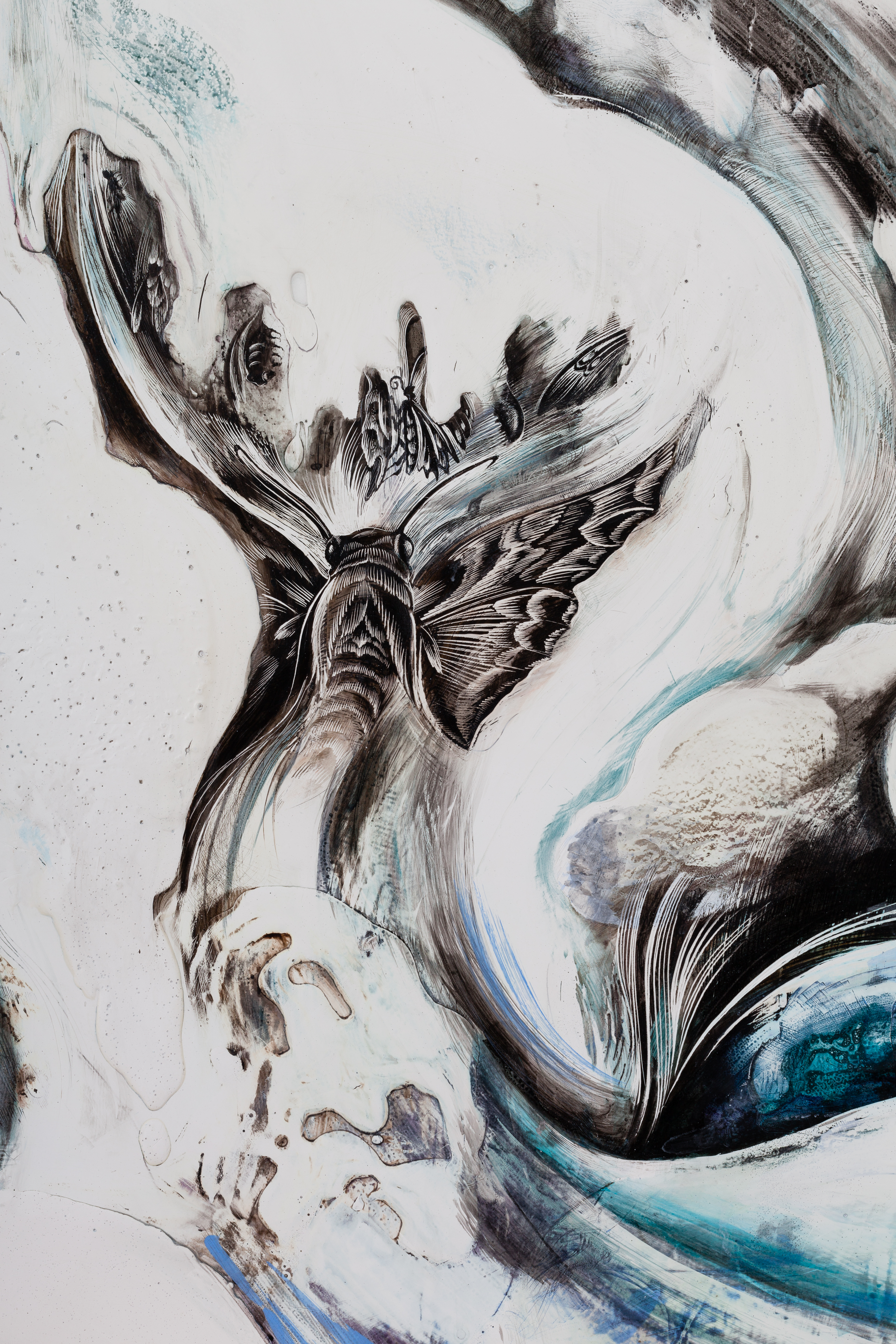
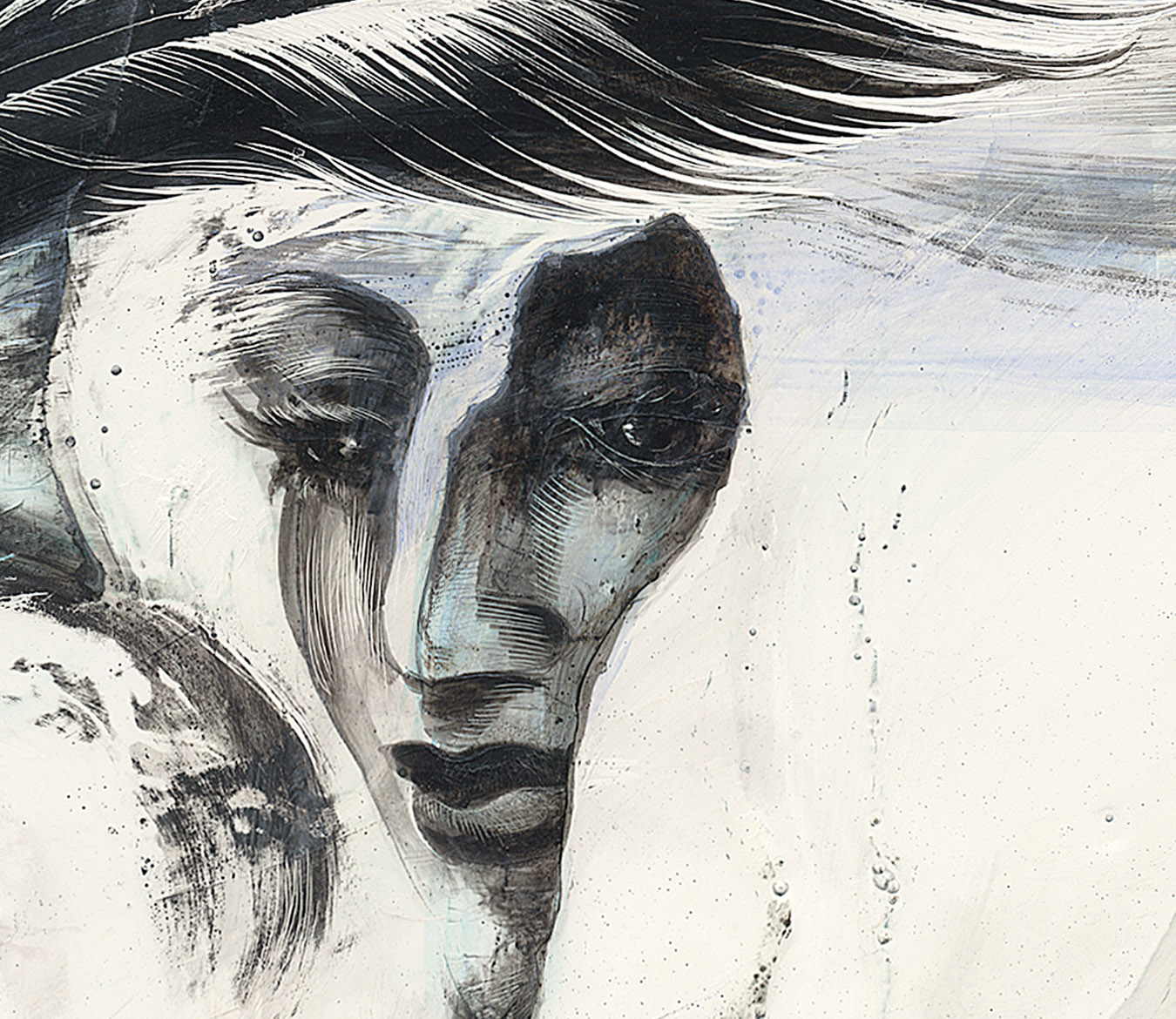
left : “Blue” 36″x48″ Inks, lacquer and clay on panel :
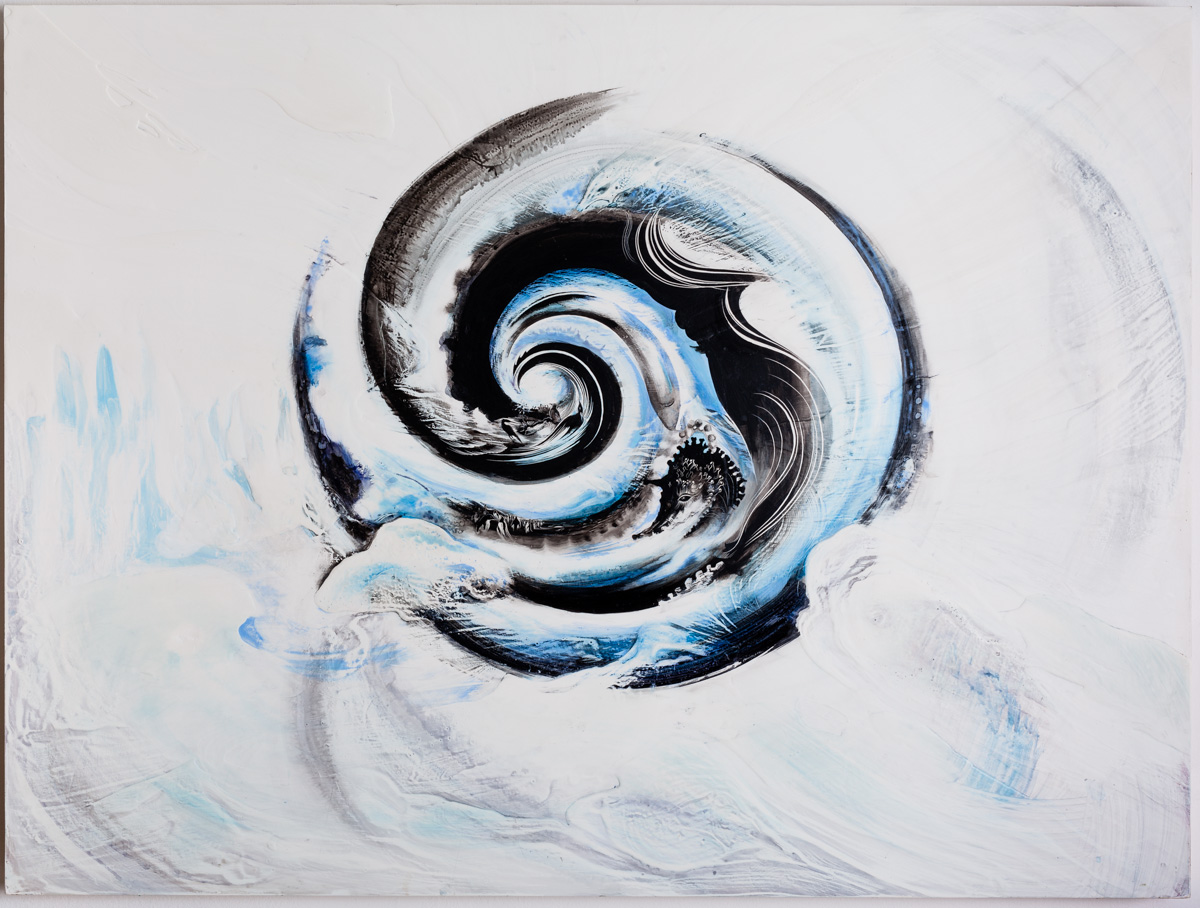

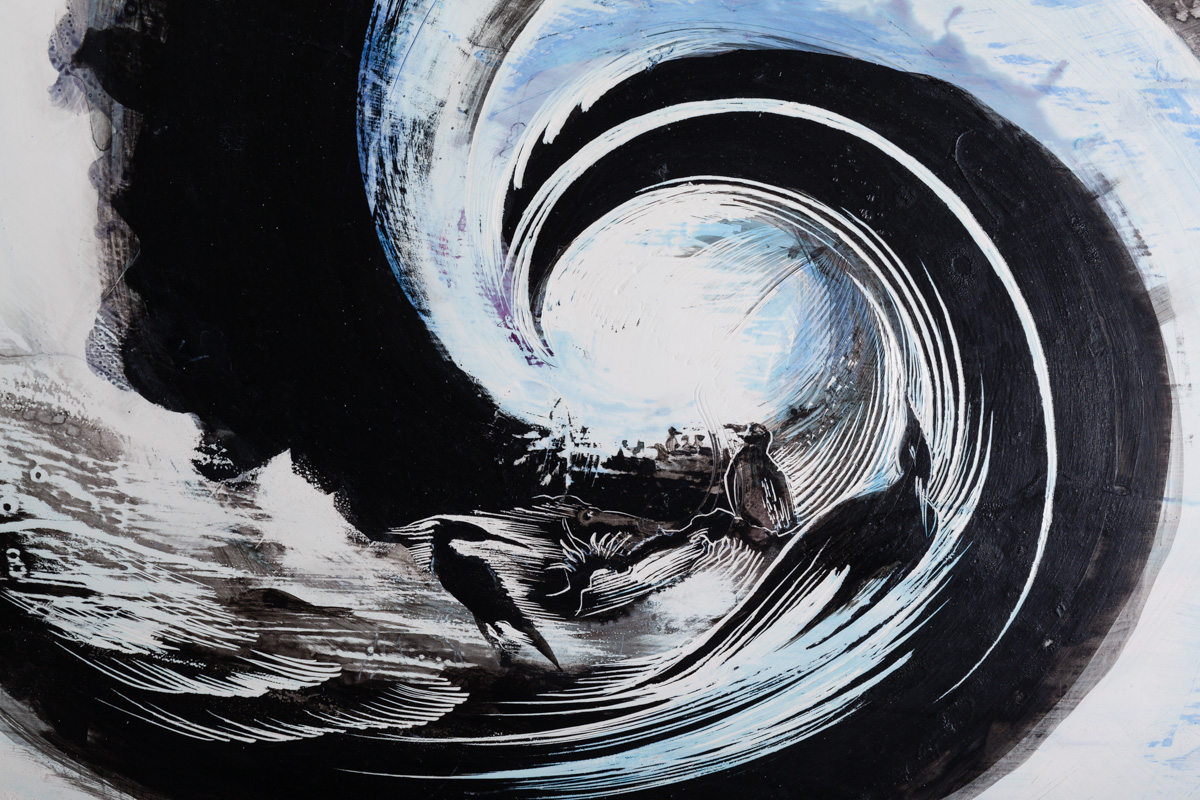


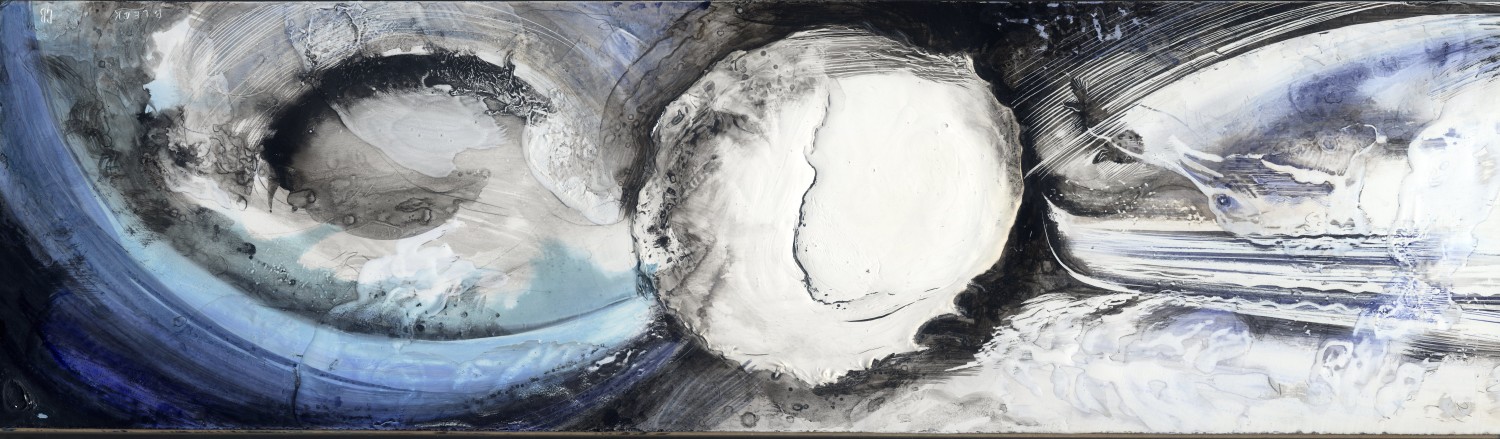
I think of the shadows as a kind of poetry that reaches into our subconscious, providing a transitory space between the dark and the light areas. Darkness heightens our sense of awareness because you have to strain “to see-to touch-to hear-to feel” darkness. Light, however, is our greatest source in seeking a direction. Yet we cannot have one without the other, because the symbolic duality between light and darkness is how we encounter our fears and continue to move forward.
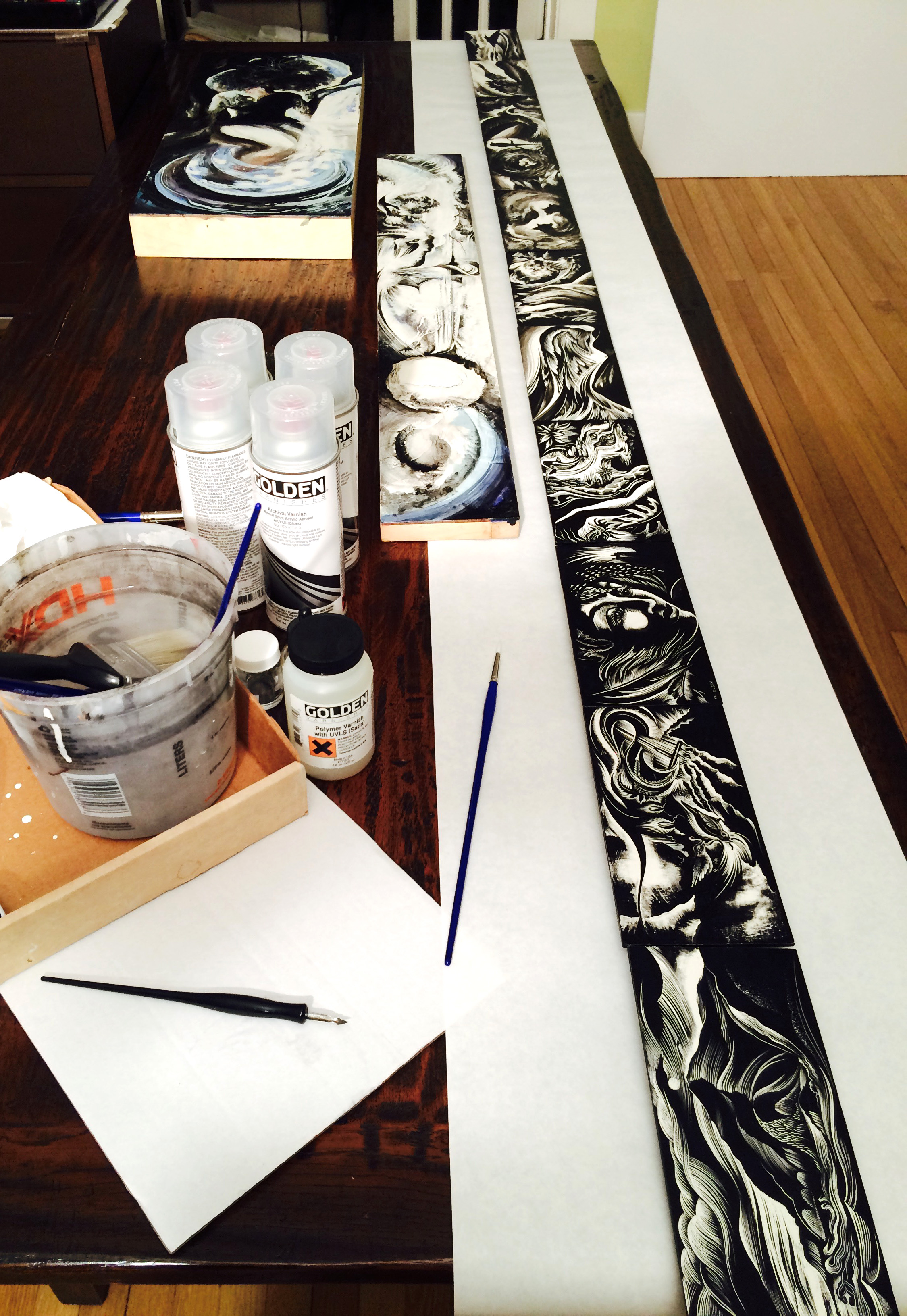
A series of 4″x8″ panels that measure 90″ as a unified group of 11 horizontal panels

Studio shot